
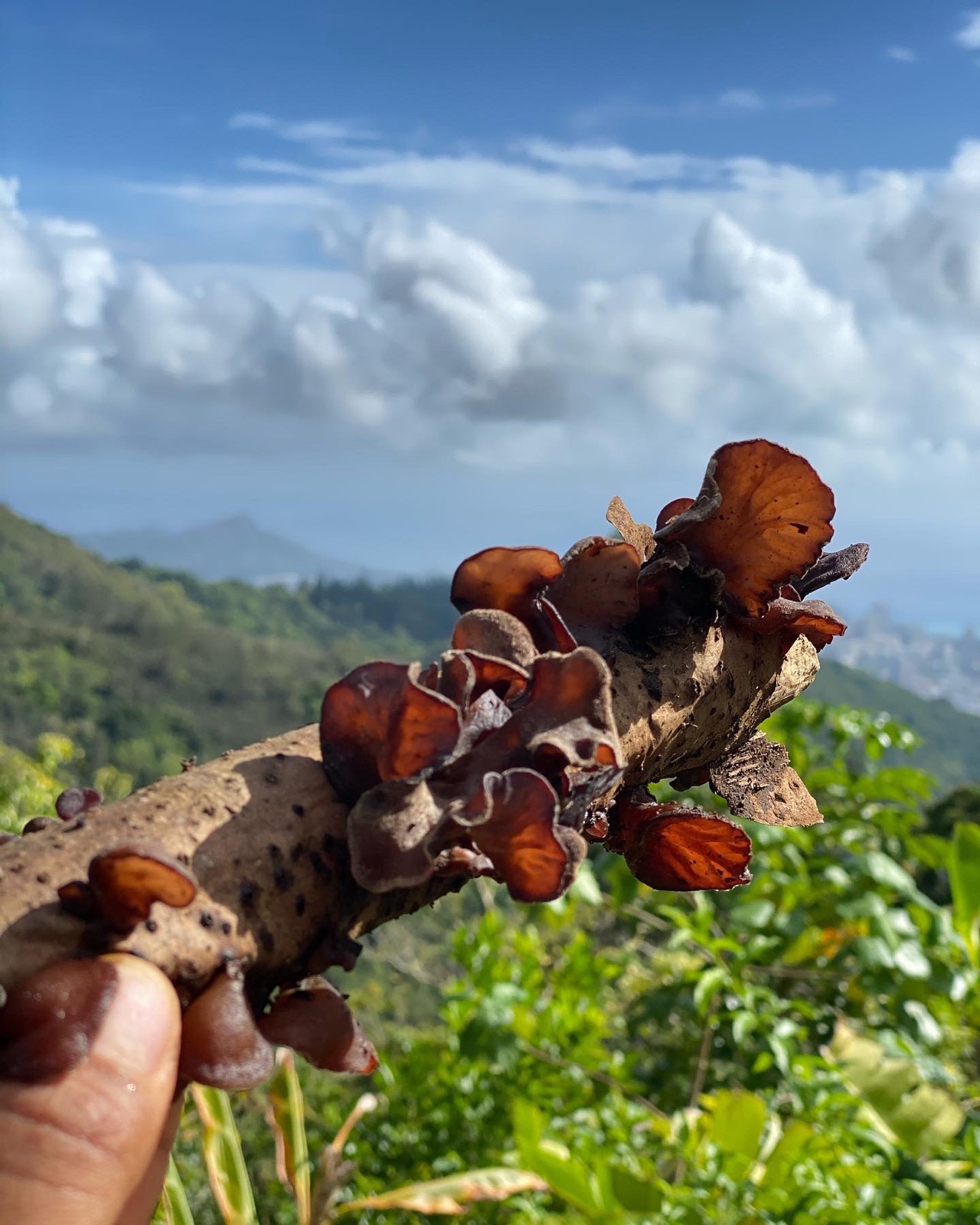
Mushroom foraging is the most rewarding kind of wild food foraging. It is also the most dangerous. That is why I started the Wild Food and Mushroom ID class.
Hawaii has edible mushrooms growing right now, in wet gulches and on fallen logs, on every major island. Most people walk right past them. This post is about the one I tell people to start with.
This Year Is a Mushroom Year
This year has been rainy and windy. The storms knocked down branches, kept logs soaking wet, and left the forest floor full of fresh dead wood. Mushrooms love it.
If you have been walking in wet forest lately, you have probably already seen pepeiao without knowing what it was.
What Pepeiao Is
Pepeiao is the Hawaiian name for wood ear mushroom, Auricularia cornea. Pepeiao means ear. Look at one and the name makes sense.
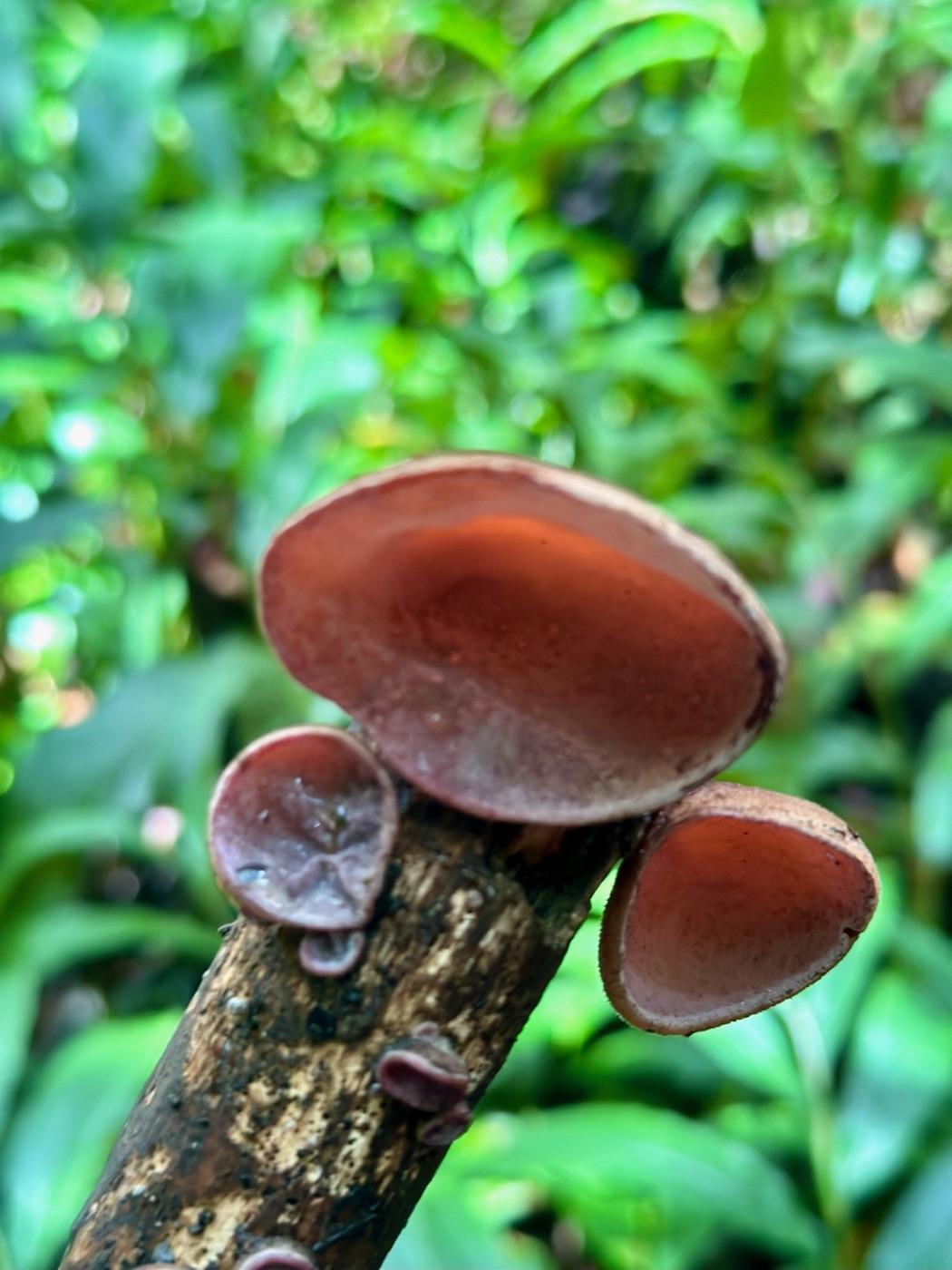
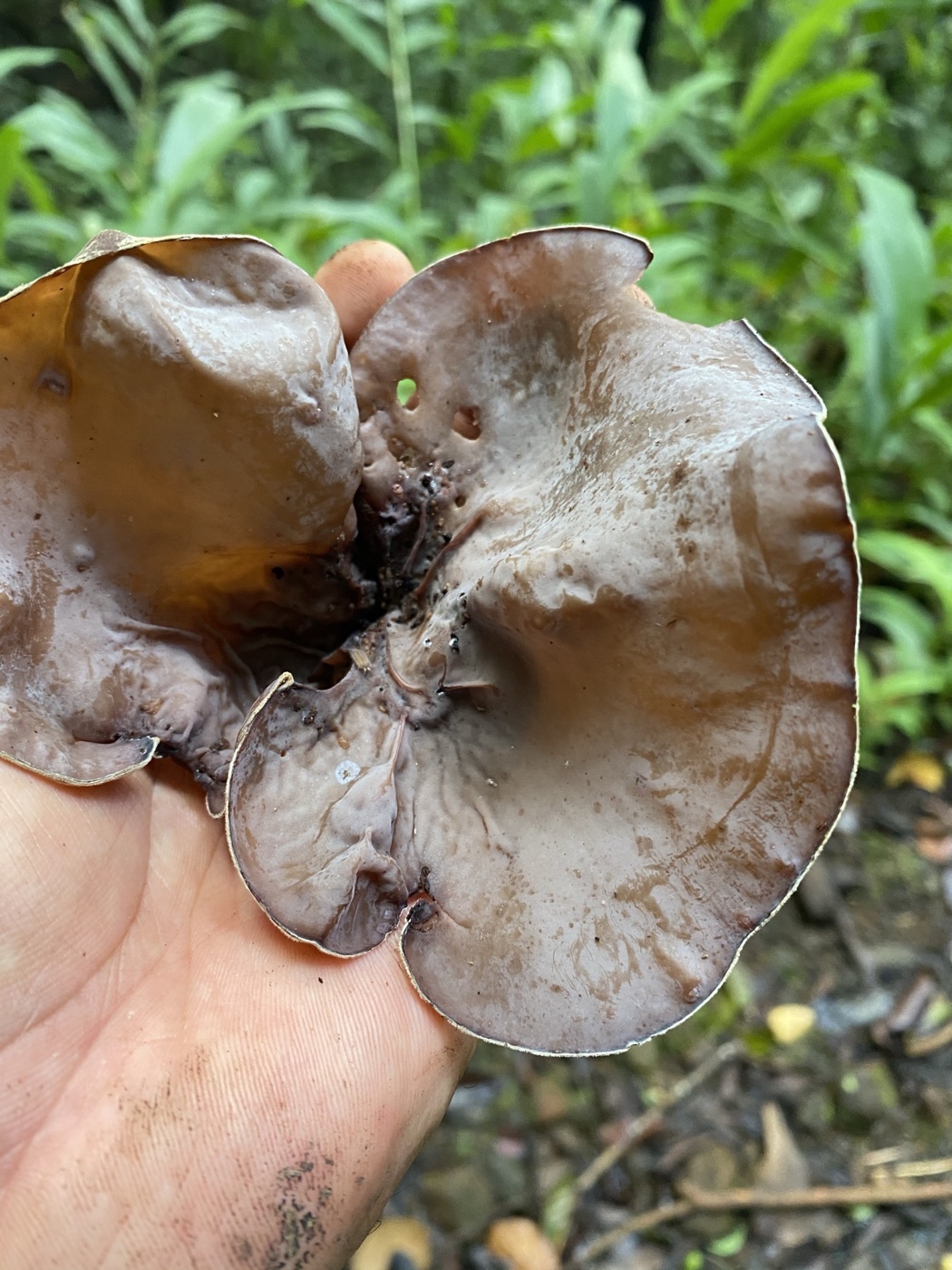
It grows in clusters on fallen logs. Brownish-gray, flexible, rubbery. Each one is shaped like an ear, one to four inches across and about an eighth of an inch thick. It attaches to the wood by one edge, not by a central stalk. Flip it over and the underside is pale tan with fine veins.
There is almost no flavor. You eat wood ear for the texture. It stays firm and a little crunchy when cooked, soaks up whatever it is cooked in, and holds up in a broth for a long time.
Where to Find It in Hawaii
Pepeiao grows on fallen kukui logs and dead hardwood in wet forest and moist gulches. You can find it on all the major islands. It likes shade, humidity, and wood that stays damp long after the rain stops.
Kukui is the tree to learn. When a kukui branch falls into a wet gulch and starts to break down, pepeiao is one of the first things to show up on it.
Finding pepeiao on a fallen kukui log in a gulch is one of the most rewarding things you can do in Hawaii’s forest. The texture is nothing like what you buy at the store.
Old Food in Hawaii
Pepeiao is one of the few mushrooms with a long culinary history here. People collected it from kukui logs in the valleys, dried it or used it fresh, and added it to chicken hekka, the dish that shows up on every potluck table in Hawaii.
Pepeiao in hekka makes the dish taste specifically Hawaiian. The mushroom and the local cooking tradition belong together, and that is old knowledge worth keeping.
Chicken Hekka with Pepeiao
Ingredients
- 1 lb chicken thighs, cut into pieces
- 1 cup fresh pepeiao, cleaned and sliced
- 2 inch piece fresh ginger, sliced thin
- 1 block firm tofu, cubed
- 1 bundle long rice (cellophane noodles), soaked
- 3 tablespoons shoyu
- 2 tablespoons sugar
- 1 cup water or broth
- Green onion and sesame oil to finish
Method
- Brown the chicken in a hot pan. Remove and set aside.
- Add the ginger and let it sizzle for a minute. Add the shoyu, sugar, and broth. Bring to a simmer.
- Return the chicken. Add the pepeiao and tofu. Simmer 10 minutes.
- Add the soaked long rice. Cook until the noodles soak up the broth.
- Finish with sesame oil and green onion. Serve family style.
Why Mushrooms Need Respect
Plants have lookalikes too, but a mushroom mistake is more likely to put you in the hospital. Telling an edible mushroom from a toxic one can come down to a single detail.
So the rules are simple:
- Never eat a mushroom you have not positively identified. Looking similar to something you know is not enough, and neither is someone else telling you it is fine.
- Cook wood ear thoroughly. Do not eat it raw.
- Learn in person. You learn the most standing at the log with someone who knows these forests, where you can touch it, see what it grows on, and see what grows next to it.
Learn It in the Field
The Wild Food and Mushroom ID class on Oahu runs two Saturdays this season: November 28 and December 5, 9:00am to 12:00pm. $100 per person, 10 spots each date. Exact location sent 48 hours before.
We cover how to find mushrooms, how to identify them, which are edible, which to avoid, and how to harvest without wrecking the log. Wild edible plants too. All levels welcome.
I am also finishing a Hawaii Foraging Field Guide with pepeiao and the other plants and mushrooms I actually use. Join the waitlist to hear when it is ready.